
Best Reads of 2025


It's that time of year to expound upon my favorite reads. These aren’t necessarily books that were written in 2025, but they are the most memorable I read last year. If you're looking to add to your TBR for 2026, these books are well worth your attention. Without further ado, the books.
Best Reads of 2025
Hardwired

At first, I found this cyberpunk classic to be overwritten. It is chock-full of similes, but Walter Jon Williams eventually won me over with his use of language that makes this hard-boiled, action-packed sci-fi all the more entrancing. Rich corporations have moved their operations into orbit where they create fantastic products for their captive consumers on Earth. The wealthy have literally abandoned our pale blue dot, leaving behind the rabble on a dystopian hellscape of a depleted planet and addiction. Who knows, maybe Williams is prescient…after all, Jeff Bezos has suggested moving manufacturing to the moon is a fantastic idea.
Astrophysics for Busy Young People

This is as close to a perfect book for the young scientist or engineer in your life as you'll find. Neil deGrasse Tyson does a wonderful job of distilling complex scientific topics into easily understandable, fascinating chapters. The book also includes many pictures and diagrams to further captivate young minds. My 10-year-old reluctant reader read this slender volume with gusto.
The Devil Reached Toward the Sky

To continue a theme, I wasn't crazy about this book when I started reading it. It's the whole oral history aspect I had a hard time getting used to. You see, Graff assiduously informs the reader who is providing the narrative material. So in some sense, the book reads almost like a screenplay with a different character speaking on practically every line. Once I got used to this device, however, I was swept away in the unfortunate history of nuclear weapons documented in this book. The oral histories of Los Alamos, Oak Ridge, and Hanford are absolutely fascinating—truly, Graff is a journalistic and storytelling genius. What put this book over the top for me was the oral history of the aviators involved in dropping the bombs, and most of all, learning of the terrible destruction and suffering caused by the bombs from the firsthand accounts of the victims. Also, it is interesting to note that there was a debate at the time about whether the bombs should be used at all. One thing is for certain: such terrible weapons of destruction should never be used again. I question the humanity of anyone who can read the firsthand accounts of bombs' aftermath and not believe nuclear weapons should never be used for a third time, or not question the wisdom of the United States' plan to test such weapons again.
Empire of AI

I read several excellent books on technology, specifically artificial intelligence, this year. The most memorable is Empire of AI by journalist Karen Hao. In my day job, I work in government sector IT. Generally, government IT isn't an early adopter of any technology. Well, AI is making big inroads, and it's not going anywhere anytime soon. I'm also an author whose work has been stolen to train large language models. Hao's book confirms all my darkest thoughts about AI and the people behind it. Admittedly, some confirmation bias is going on here. Still, the author presents a compelling and disturbing portrait of the AI industry that is just as exploitative and callous in its pursuit of expansion and profit as the robber barons of old.
Between the World and Me

Recently, reading banned books has become a passion of mine. Be a rebel. Think dangerous thoughts. Read books "the man" doesn't want you to. Between the World to Me is the book that got me started on my banned book odyssey. It's a letter from the author to his son on how to navigate the world as a black man. Although I don't think the term ever comes up, it was only after reading this volume that I understood on a visceral level what white privilege is. For that lesson, I owe Mr. Coates a great debt and for convincing me that if a book is banned, it contains knowledge the powerful fear.
The Trials of Empire

The Trials of Empire by Richard Swan is the exciting conclusion to the amazing Empire of the Wolf trilogy. This novel features one of the best narrators I've encountered in fantasy and an incredibly intriguing protagonist. Although the antagonists in this book are 100% evildoers, there are no true "good guys." The lawmen and women in this book are all shades of gray. It's also an interesting concept, a fantasy book about a country lawyer. Don't let that fool you, there's plenty of magic and mayhem. This is the first book and series I have read in a long time that I didn't want to end.
Kindred
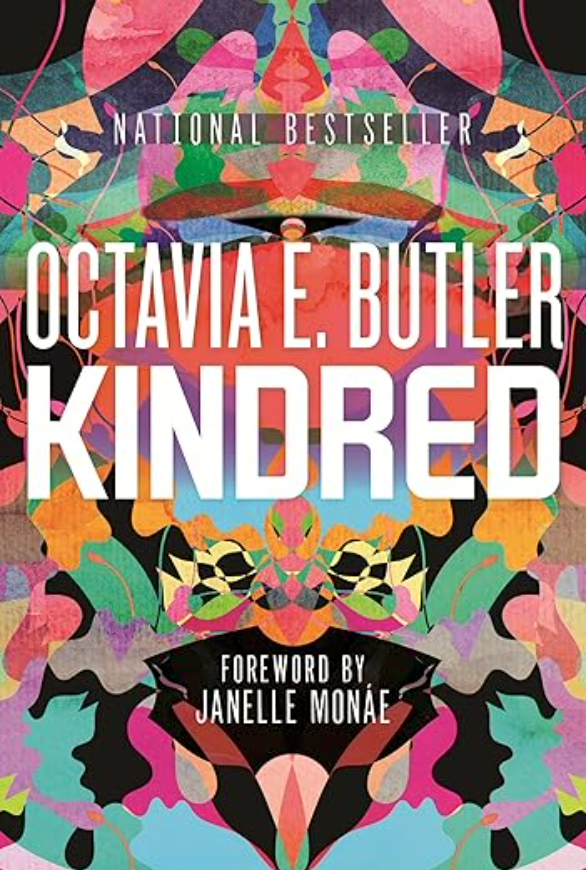
I have recently become a huge fan of Octavia E. Butler. I decided to give Kindred a read after enjoying the hell out of Parable of the Sower, which is also a must-read, IMO. Kindred has one of the most amazing openings I've ever encountered in a book. I won't say more as not to spoil Butler's fantastic hook. The tale involves a black woman being thrust back in time to pre-Civil War America, where she encounters her ancestors. It's a heartrending and suspenseful yarn that keeps readers flipping pages thanks to that marvelous opening hook.
Internment

This is another banned book, which is why I chose to read it. It stayed on my TBR for quite a while and nearly fell off. Boy, am I glad Ahmed's novel didn't! Truly, an amazing read, a hard one at times, but that made it all the more worthwhile. The author takes direct aim at the divisive, and dare I say, racist rhetoric present in American politics, and warns us where that has led before and might lead to again. At times, it was a difficult read because I found the narrative of imprisoning people based on racial and cultural profiling hit close to home.
They Called Us Enemy

I picked this graphic novel up for two reasons: it's been widely banned and the author is George Takei of Star Trek fame. Takei powerfully tells the terrible tale of him and his family being imprisoned during WWII for their Japanese heritage. The graphic novel format makes this sad period in U.S. history easily accessible to readers young and old. For fans of Star Trek or who have heard Takei speak on justice issues, you can't help but hear his voice while reading the words on the page. Don't let the book banners erase history, read The Called Us Enemy.
True Grit

I read True Grit after horror author Joe Hill recommended it for its powerful and unique "voice." Bottom line, listen to Joe—he's literary royalty, and 100% correct regarding Portis's novel. If you are a writer and want to understand what voice is and to improve it in your writing, sprint to your library or favorite bookstore and start reading this classic western right now.
It Can't Happen Here

This is a book I've been wanting to read since high school. It's faced banning over the years. At this point in time, it feels incredibly timely. The yarn details the rise and fall of American fascism. You may or may not agree that Lewis is prescient after reading this novel, but you can't help seeing parallels between Buzz Windrip's America and the present day.


Comments